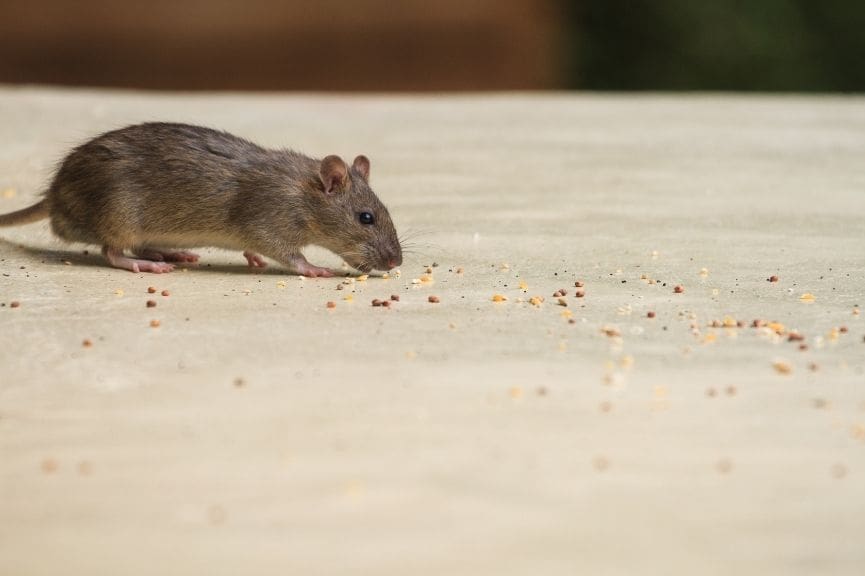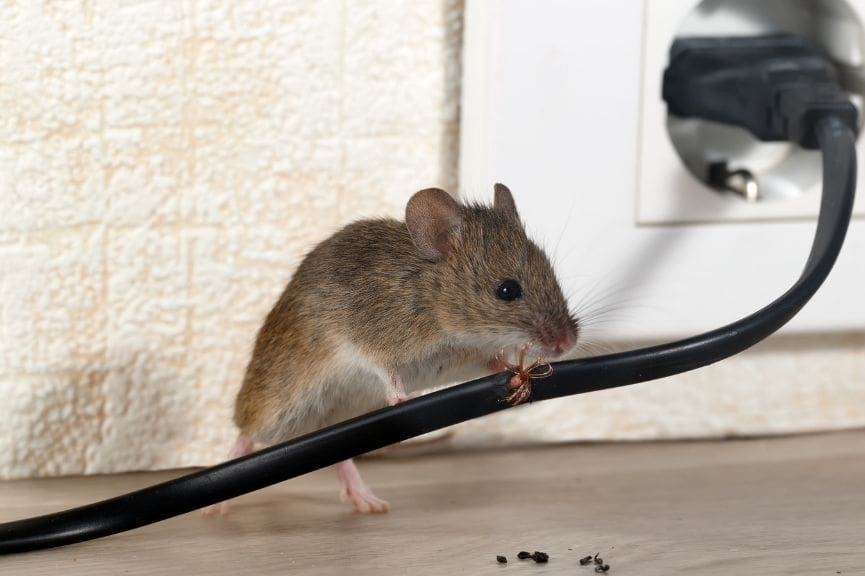
If you are hearing heavy scrambling above the ceiling at night in New Braunfels, Seguin, or anywhere in the surrounding Hill Country, there is a strong chance you have roof rats.
Roof rats are the dominant rat species across Central Texas, and they are attic specialists. Understanding how they operate makes it much clearer why they got in, why they are hard to remove, and what actually keeps them out.
What a Roof Rat Actually Is
The roof rat, also called the black rat or palm rat, is a slimmer, more agile rat than its cousin the Norway rat. Body length runs about six to eight inches, and the tail is longer than the body, which is one of the easier field identifiers.
The defining trait is climbing ability. Roof rats are exceptional climbers. They travel utility lines, fence tops, tree limbs, vines, and exterior walls with ease. Where a Norway rat burrows into the ground, a roof rat goes up.
That single behavioral difference explains almost everything about how they get into homes.
What is the difference between a roof rat and a Norway rat? Roof rats are slimmer with a tail longer than their body, and they nest high in attics, soffits, and trees. Norway rats are heavier with a tail shorter than their body, and they burrow low near foundations, sheds, and driveways. Roof rats are the more common species in Central Texas.
Why Central Texas Is Ideal Roof Rat Habitat
Several things about this region suit roof rats particularly well.
The tree canopy is dense in established neighborhoods. Mature live oaks, pecans, and cedar elms provide both habitat and highways to nearby roofs. Older New Braunfels neighborhoods in particular have significant canopy overhang.
Mild winters mean populations do not get knocked back the way they do in colder climates. Roof rats breed year round here.
The river corridors along the Guadalupe and Comal, along with creek beds, greenbelts, and drainage channels, provide continuous cover and water. Properties backing onto these areas see consistently higher pressure.
New development also plays a role. When land is cleared for construction in growing areas like Schertz, Cibolo, and the New Braunfels outskirts, displaced rodents move into whatever structures are nearby.
How Roof Rats Get Into Your Attic
These are the entry points we find most often on Central Texas homes.
Overhanging tree limbs. This is the leading contributing factor by a wide margin. Any branch within roughly three to four feet of the roof is a functional bridge. Roof rats jump and climb well enough that they do not need contact with the structure.
Roof line and fascia gaps. Where roof decking meets the fascia board there is frequently a gap, particularly on older homes or after storm damage has lifted or warped materials.
Soffit and attic vents. Damaged screens, loose vents, or unscreened openings give direct access into the attic space.
Utility line penetrations. Where power, cable, or AC refrigerant lines enter the structure, the gap around the penetration is often unsealed or sealed only with foam, which rats chew through easily.
Chimney openings. Uncapped or damaged chimney caps.
Vines and trellises. Ivy, wisteria, and similar climbing plants growing up an exterior wall function exactly like a ladder.
The Damage Roof Rats Cause
Attic rat activity is not a cosmetic problem, and this is the part homeowners tend to underestimate.
Electrical wiring. Rat incisors grow continuously, so chewing is not optional behavior for them, it is biological maintenance. In an attic, the available things to chew include wood framing, PVC, ductwork, and wiring. Chewed insulation on a live wire surrounded by dry cellulose or fiberglass insulation is a genuine fire risk.
Insulation. Roof rats tunnel through and nest in attic insulation, flattening it and reducing its effectiveness. They also contaminate it with urine and droppings.
Ductwork. Chewed or displaced flex duct means conditioned air venting into the attic and contaminated air circulating through the home.
Structural. Gnaw damage to framing, fascia, soffit, and roof decking, which widens the original entry point and invites additional rodents and wildlife.
Do rats in the attic cause a fire risk? Yes. Rats gnaw continuously because their incisors never stop growing, and attic wiring is a common target. Chewed insulation on live wiring surrounded by attic insulation is a legitimate fire hazard, which is why attic rat activity should be treated as urgent.
Why Roof Rats Are Hard to Remove
Two reasons, and both matter.
First, they are cautious. Roof rats avoid unfamiliar objects in their established territory. Set a new trap in an active runway and it can sit untouched for several days while the rats simply route around it. Homeowners frequently interpret the empty trap as evidence the problem resolved itself.
Second, the attic environment works against DIY effort. Runways are along beams, in insulation, and in spaces that are awkward or unsafe to reach. Confirming where activity is actually happening, rather than where the noise sounds like it is coming from, requires getting into the space and reading the signs.
Rodenticide is generally the wrong tool in an occupied home. A rat that dies inside a wall cavity or under insulation cannot be retrieved, which produces a significant odor problem for several weeks followed by a secondary fly and beetle issue.
How Camo Pest Control Removes Roof Rats
Inspection starting at the roof line. We check soffits, fascia, vents, the chimney, utility penetrations, and any vegetation providing access. Inside the attic, we look for runways, rub marks, droppings, nesting sites, and chew damage.
Trapping placed on confirmed runways. Traps go where activity is verified, staged to account for rat caution, and adjusted as the job progresses.
Exclusion. We seal entry points with materials rats cannot chew through, including hardware cloth, copper mesh, and sheet metal where appropriate. This is the step that determines whether the problem stays solved. Read more about how rodent exclusion works.
Trimming recommendations. We will tell you which limbs need cutting back. Sealing a home while leaving a branch resting on the roof solves half the problem.
Follow up. We return to verify activity has stopped rather than assuming it has.
Serving New Braunfels and Surrounding Communities
Camo Pest Control handles roof rat removal for homes and businesses across New Braunfels, Seguin, Canyon Lake, San Marcos, Schertz, Cibolo, Garden Ridge, Buda, Spring Branch, La Vernia, and Bulverde.
If you are hearing something heavy moving overhead after dark, do not wait it out. Attic rat activity tends to increase rather than resolve.
Learn more about rat control services, or call Camo Pest Control at 830-777-CAMO (2266) to schedule an inspection.
Not sure whether you have rats or mice? We break down how to tell the difference here.